
Pulled X 2
the paper that sits just below the ink

For 16 years, Print Matters Houston has been putting on a series of exhibits and events in various Houston galleries and art spaces. Often these exhibits have an educational aspect to it, educating potential collectors on what an art print actually is. The world of printmaking has two parts: the paper and the image on the paper. Various printing technologies are employed to apply ink to the paper—etching a metal plate to hold the ink that is applied to the it, carving an image in wood that is then coated with ink and pressed onto paper, using the ink being repelled by grease to produce an image on a stone that is then pressed into the paper, cutting stencils and forcing the ink through scrims of stretched silk. Within each of these ink-transporting techniques (etching, woodcuts, lithography, and silkscreen) are several very specific sub-sets of print technology. But all these have one thing in common—they move the inked image onto paper. And making paper is its own craft. Pulled X 2 at the downtown public library is a group of 15 printmakers joined with eight paper makers who created special papers for this exhibit. Each print is displayed next to a blank sheet of the handmade paper.
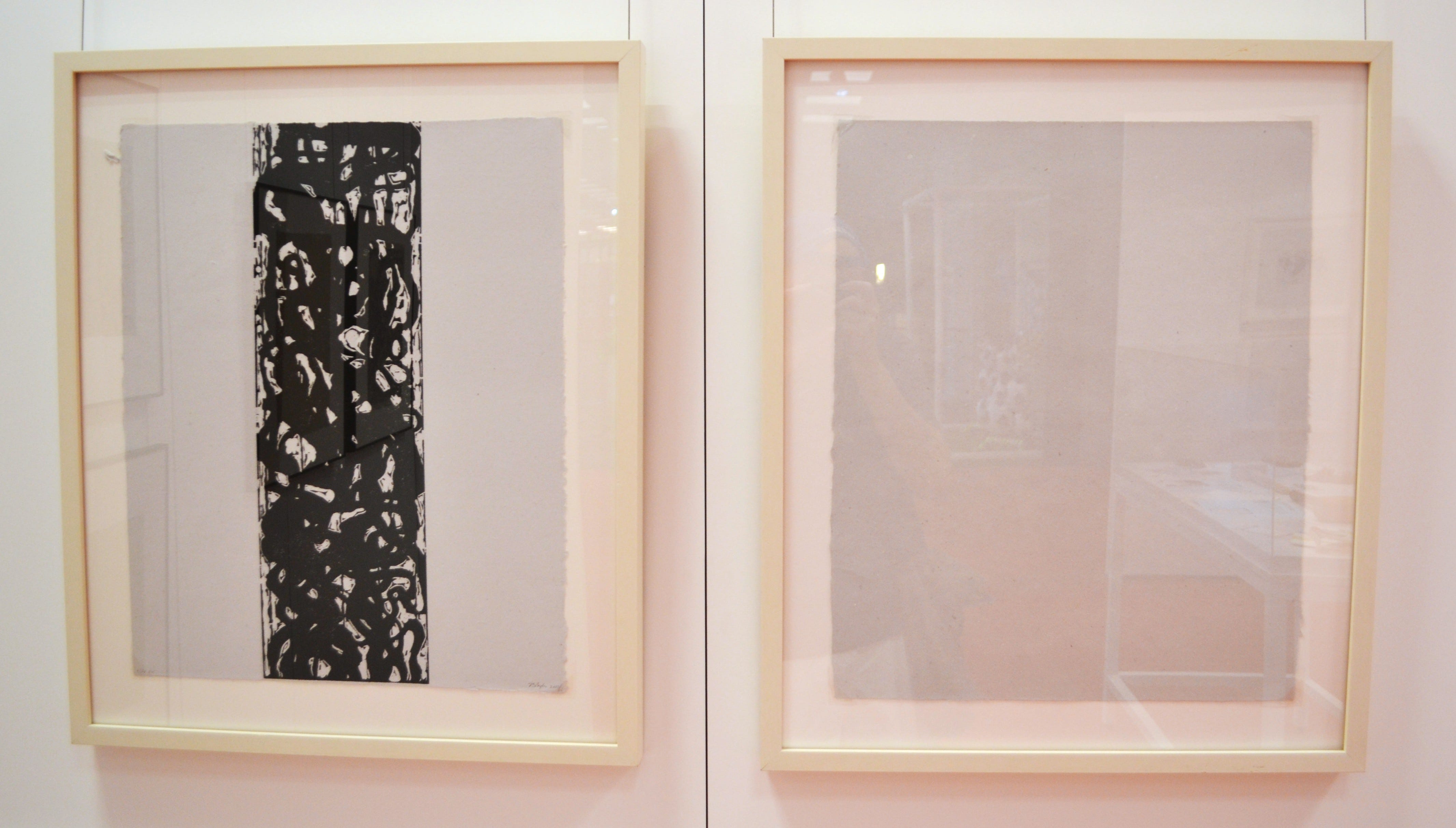
Bill Pangburn is art instructor at the Fashion Institute of Technology and the director of the Anya and Andrew Shiva Gallery at John Jay College—in short, Pangburn is an arts administrator in addition to being an artist. His untitled woodcut print is handsome and tasteful, but the paper is really jumps out. Paper a substance that is usually easy to ignore, but Steve Kostell’s paper has an aggressive presence. All the prints and paper samples are displayed under glass, which is a shame. I would love to handle Kostell’s paper, which was employed by two of the printmakers in this exhibit.
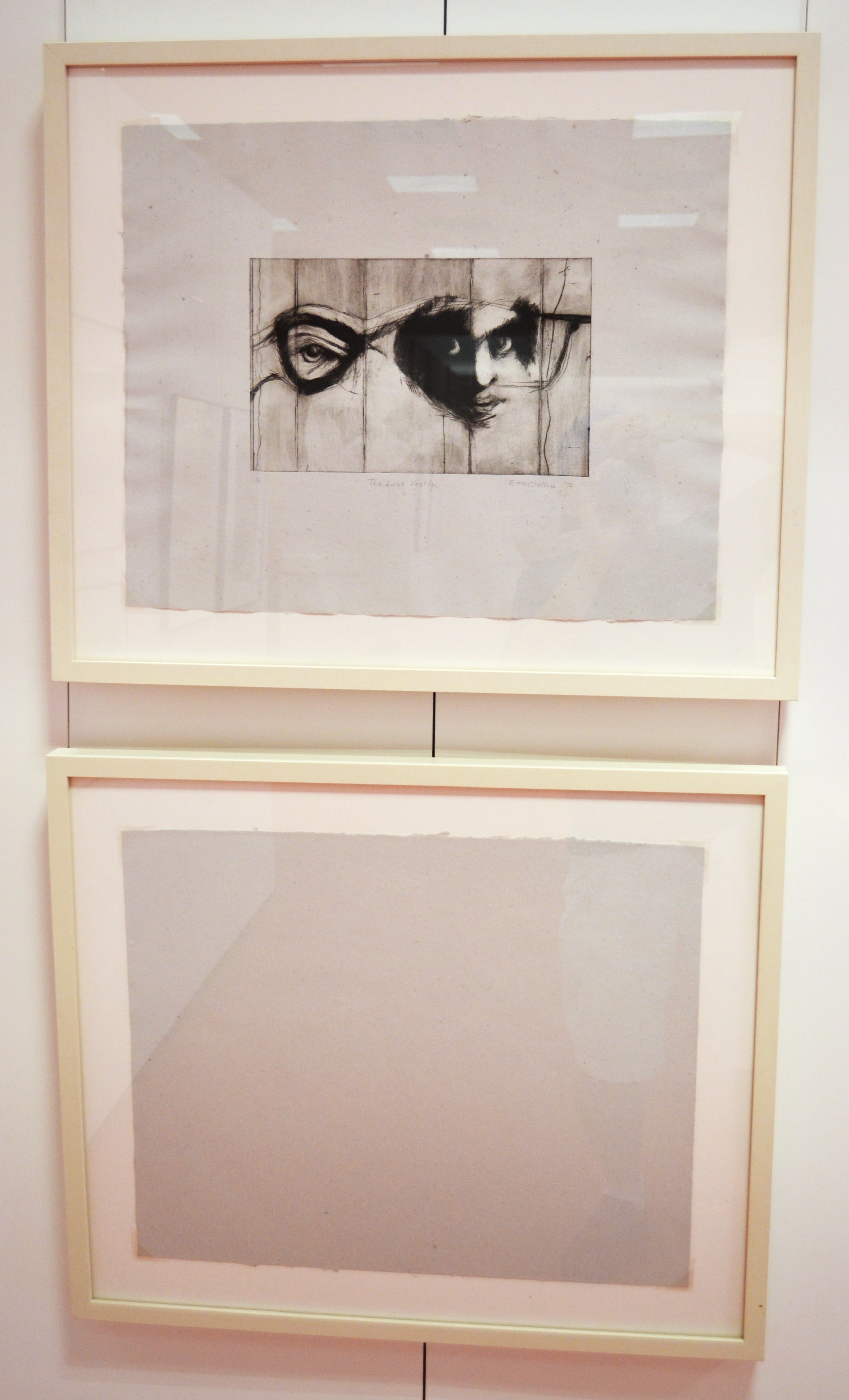
Eileen McClellan’s The Last Vestige feels like she is quoting images from a film, perhaps a spy movie like The Conversation or Three Days of the Condor. Going by McClellan’s Instagram, her favorite subject are human faces with somewhat shadowy eyes, as in The Last Vestige. Her tonal range is well suited to the drypoint technique and to the charcoal and graphite-infused paper she employs. A tiny amount of research into the Kostell’s work demonstrates what a well-developed a subculture paper-making is.
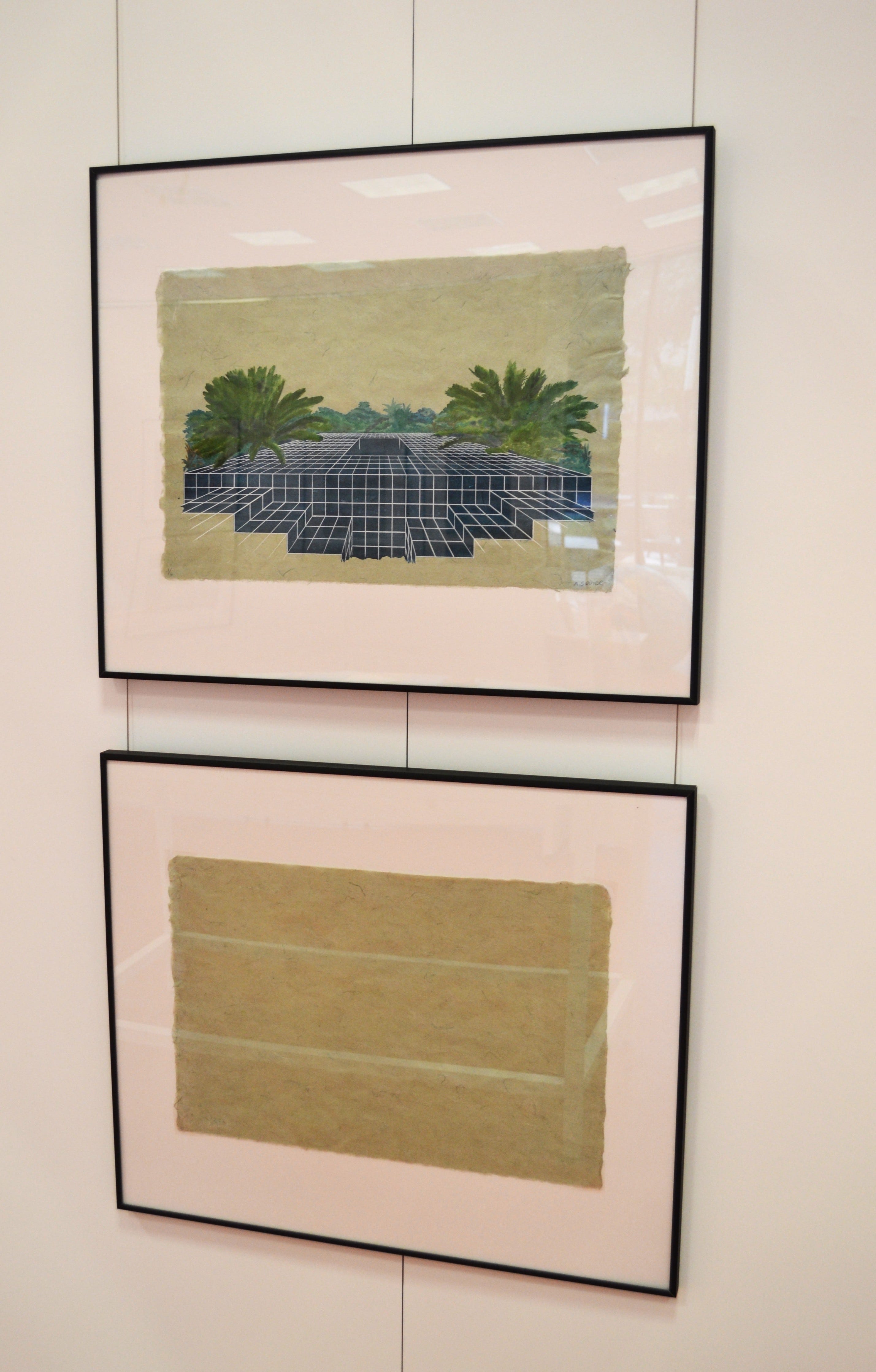
Thai kozo is a type of paper made from the inner bark of the paper mulberry tree, and is a popular among artists for its light weight and semi-translucent surface. Like many of the paper-makers in this exhibit, Jamie Lee Capps is a printmaker in addition to making fine art paper. Her paper has a yellowish color and a visible texture, in such a way that it feels right to frame and display a blank sheet of Capps’ paper. Alexander Squier has been engaging in a kind of urban archeology in Houston for the past few years—including assembling the Houston Brick Archive, collecting and researching the origin various distinct bricks from various sites around Houston, as well as turning a 1959 Sharpstown ranch house into an archeological museum called Remnants / Visions. His fascination with bricks is on display in Gridlandia: Hole.
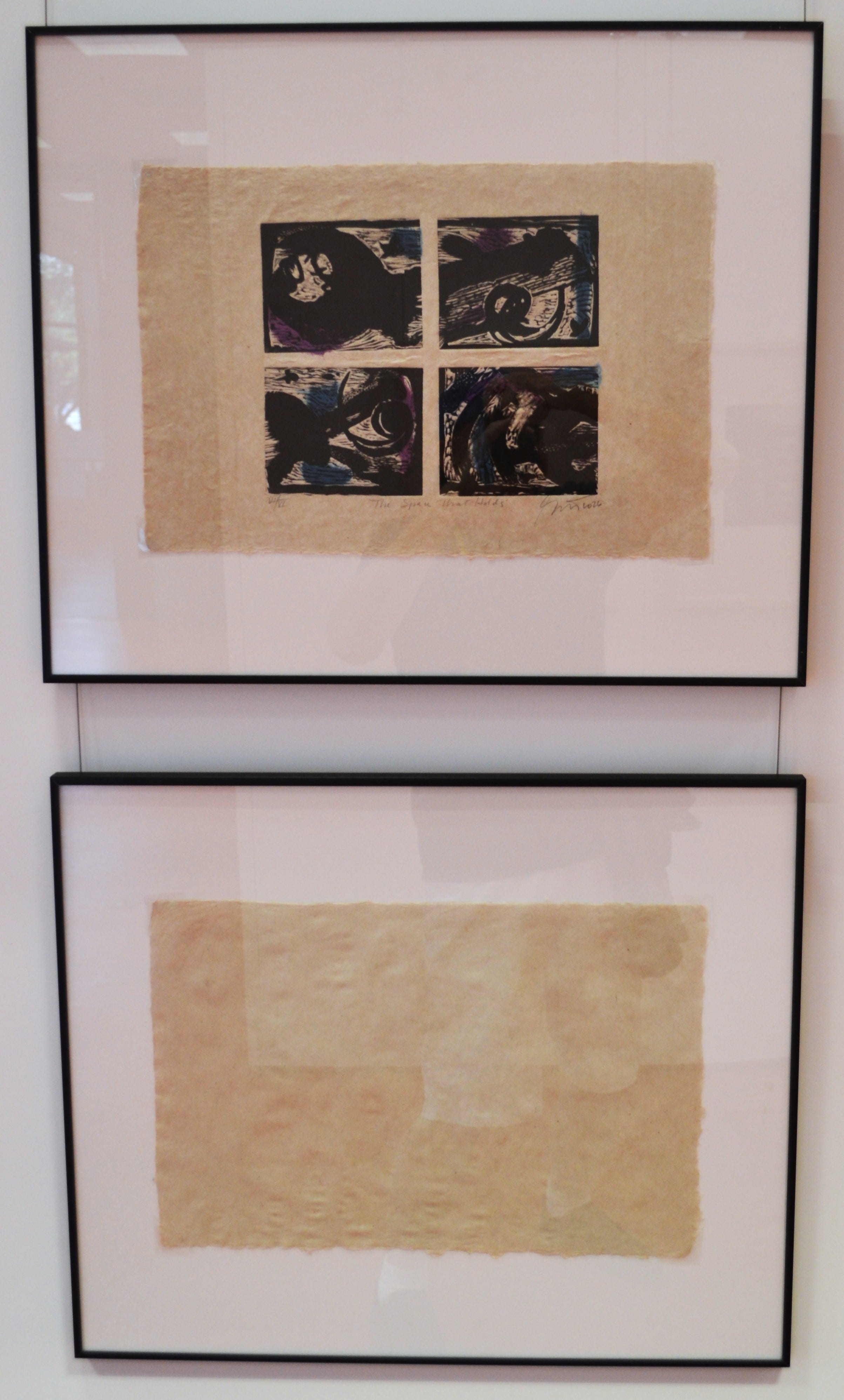
Gloria Sanchez Hart’s print, The Space That Holds, has four rectangular sections organized in such a way that to me reads like a 4-panel comic strip. However, it is hard to read these four abstract images as a sequence—it only seems natural to me that rectangular panels arranged like this must be read left-to-right, top-to-bottom because I have spent the past 50 years seeing that arrangement of shapes as a comic strip. The four images are drawn in black with layers of purple and blue underneath. The second and third panels have a repeated apostrophe-shaped section that to me reads like a picture of an actual thing—an object that exists between an apostrophe and a tadpole. If this is a comic, the tadpole is the main character.
The tan, mottled paper made by Suzanne Baker is ideal for a comic-strip-like print. It resembles yellowed newsprint—the classic paper medium for an old comic strip. Abacá is a species of banana tree native to the Philippines which produce the strongest natural fibers in the world. Iris fibers are also very strong. I don’t know enough about paper making to know what the benefit of would combining abacá and iris leaves would provide, but it looks cool.
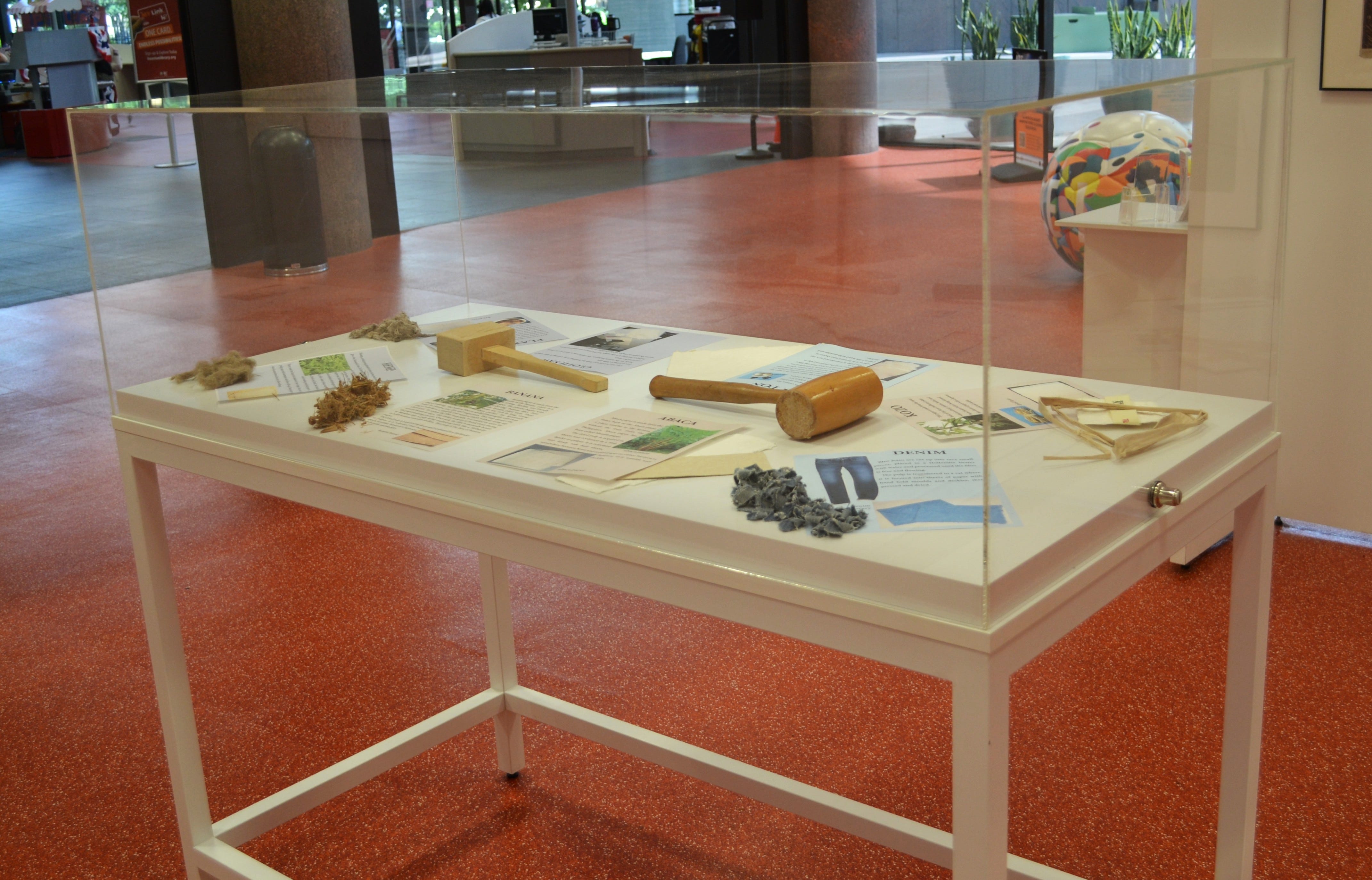
It wouldn’t be an exhibit at the Houston Public Library without an educational component. Pulled X 2 includes three large vitrines to explain what goes into making art papers, how such paper is manufactured, and various printmaking techniques. The vitrine above contains samples of the fancy shit that papermakers will use as raw material for the paper they create, including flax, hemp, banana, abacá, denim (as in ripped up old bluejeans), kozo, and cotton.
I’ve tried out all of the above printmaking techniques in my own short career as an artist (except for chine-collé), but I learned more about paper making in the hour I spent looking at Pulled X 2 than I had learned in the previous 60+ years of my life. After this, I will never look at silkscreens or etchings or woodcuts without thinking about the paper sitting right below the ink.
Furthermore, I am of the opinion that for the good of America, Jeffrey Epstein’s best friend Donald Trump must release everything related to the Epstein case (unredacted), disband ICE, and resign.
[Please consider supporting this publication by subscribing, by becoming a patron, or you can also support it by patronizing our online store.]
Thanks for all the details on paper and print, plus the location of the exhibit.